

A sleep apnoea mouth guard is a custom oral appliance used to manage obstructive sleep apnoea (OSA) in suitable patients. Unlike a sports mouthguard or a standard night guard for teeth grinding, it is designed to hold the lower jaw slightly forward during sleep, creating more room in the upper airway.
These appliances are most commonly known as mandibular advancement splints (MAS) or mandibular advancement devices (MAD). They are generally considered for mild to moderate obstructive sleep apnoea and may also be considered when CPAP therapy is not tolerated or an alternative treatment has been recommended.
According to the Sleep Health Foundation, oral appliances work best for selected patients and should be custom fitted rather than replaced with an over-the-counter device.
What is a sleep apnoea mouth guard?
A sleep apnoea mouth guard is an oral appliance designed to reduce airway obstruction during sleep. Most devices used for OSA work by changing the position of the lower jaw rather than simply covering or protecting the teeth.
Although these appliances can resemble a mouthguard, their purpose is very different from sports mouthguards, bruxism splints or generic anti-snoring products.
Mandibular advancement splints and devices
A mandibular advancement splint holds the lower jaw forward while a person sleeps. Moving the lower jaw forward also influences the position of the tongue and surrounding soft tissues, which can increase the amount of space available in the upper airway.
The terms mandibular advancement splint, mandibular advancement device, MAS and MAD are often used for similar types of dental sleep appliances. In Australia, mandibular advancement splints are commonly used as an oral appliance treatment for selected cases of obstructive sleep apnoea and snoring.
Is it the same as an ordinary mouthguard?
No. Mouthguards commonly used for sport protect the teeth from impact, while night guards for grinding mainly protect teeth from wear and excessive forces.
An OSA oral appliance is specifically designed to position the jaw in a way that helps maintain airflow during sleep. Over-the-counter anti-snoring mouthguards may look similar, but non-custom devices do not work consistently enough to be considered equivalent to a professionally fitted appliance.
How does a mandibular advancement device work?
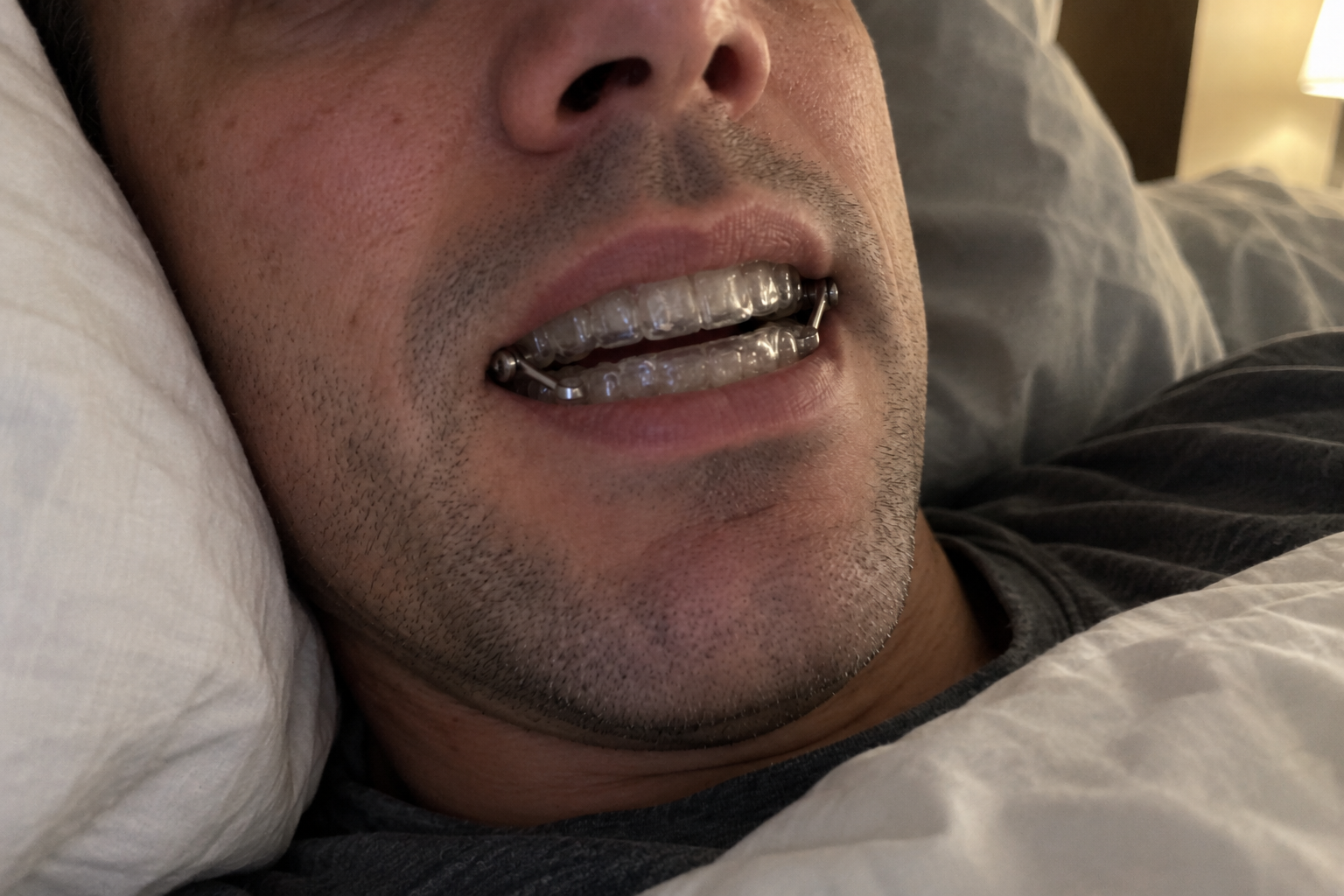
A mandibular advancement device works by holding the lower jaw in a slightly advanced position throughout sleep. This can increase space behind the tongue and reduce the likelihood of soft tissues narrowing or obstructing the airway.
The appliance does not create positive airway pressure like a CPAP machine. Instead, it changes the position of the mouth and jaw to help keep the airway open during sleep.
How moving the lower jaw affects the airway
During sleep, muscles around the throat naturally relax. In obstructive sleep apnoea, this can allow the upper airway to become repeatedly narrowed or blocked.
A mandibular advancement splint moves the lower jaw forward to make the airway wider. This can reduce both airway obstruction and the tissue vibration responsible for snoring.
Does it work for every type of sleep apnoea?
No. Oral appliances primarily target obstructive sleep apnoea, where breathing interruptions are caused by physical blockage of the upper airway.
Central sleep apnoea is different because breathing pauses occur due to changes in the brain’s drive to breathe rather than an obstructed airway. Mandibular advancement appliances are therefore unlikely to address central sleep apnoea, which requires medical assessment and a different treatment approach.
Who may benefit from a sleep apnoea mouthguard?
Oral appliance therapy can be appropriate for some adults with obstructive sleep apnoea, but suitability depends on the diagnosis, severity, symptoms, oral health and response to other treatment options. A mouth guard for sleep apnoea should therefore be considered as part of a broader sleep care plan rather than purchased solely because snoring is present.
Australian guidance particularly supports oral appliances for mild to moderate OSA, while CPAP is commonly recommended for moderate or severe disease.
People with mild to moderate obstructive sleep apnoea
Sleep studies commonly use the apnoea-hypopnoea index, or AHI, to describe how frequently breathing events occur during sleep. Australasian sleep-study guidance describes an AHI of 5 to less than 15 events per hour as mild OSA, 15 to less than 30 as moderate OSA, and 30 or more as severe OSA, although the interpreting physician should consider the wider clinical picture rather than the AHI alone.
A custom mandibular advancement splint may be considered particularly for mild to moderate obstructive sleep apnoea. Individual response still varies, so improvement in snoring alone does not confirm that the underlying sleep apnoea has been adequately controlled.
People who cannot tolerate CPAP
CPAP is highly effective at maintaining airway pressure and reducing breathing disturbances when used correctly. However, some patients have difficulty tolerating a mask or using the equipment consistently.
US clinical guidelines from the American Academy of Sleep Medicine and American Academy of Dental Sleep Medicine recommend that oral appliances be considered for adults with OSA who are intolerant of CPAP or who prefer an alternative after appropriate medical assessment. Those guidelines favour custom, adjustable appliances provided by an appropriately trained dentist.
When an oral appliance may not be suitable
A mandibular advancement splint is not automatically appropriate simply because a person snores. Central sleep apnoea, severe untreated OSA and other medical or anatomical factors may require different management.
Dental suitability also needs assessment because the device places ongoing forces on the teeth and jaw. Existing dental work, tooth stability, gum health, jaw comfort and bite relationships may all need to be considered before appliance therapy proceeds.
How do a GP, sleep physician, and dentist work together?

Sleep apnoea care is usually most effective when diagnosis and dental treatment are coordinated rather than managed separately. The GP or medical team identifies possible sleep apnoea and arranges appropriate investigation, while a dentist manages the oral and dental aspects if an appliance becomes part of the treatment plan.
This distinction is important because a dentist can provide and monitor a dental appliance, but sleep apnoea itself requires medical diagnosis and ongoing assessment.
Step 1: A GP assesses possible sleep apnoea
A GP can assess symptoms such as loud snoring, witnessed breathing pauses, gasping during sleep and persistent daytime sleepiness. Healthdirect advises seeing a doctor when obstructive sleep apnoea is suspected, with referral to a sleep specialist or sleep clinic where appropriate.
This medical assessment is also important because tiredness, poor sleep and snoring can have causes other than OSA.
Step 2: A sleep study confirms the diagnosis
A sleep study records breathing and oxygen levels while a person sleeps and may also measure brain activity, heart rate and body movement depending on the type of study. Testing can take place in a sleep clinic or, for suitable patients, at home.
The results help the medical team establish whether obstructive sleep apnoea is present and assess its severity before deciding which treatment option is most appropriate.
Step 3: The treatment plan is discussed
Once the diagnosis is established, a GP or sleep physician can discuss options such as CPAP therapy, oral appliance therapy, positional treatment, lifestyle measures or other interventions depending on the individual case.
The Sleep Health Foundation describes a pathway in which a GP may refer a patient to a sleep specialist and, when an oral appliance is selected, the sleep specialist and dentist continue to share care.
Step 4: A dentist assesses and fits the appliance
When mandibular advancement therapy is considered suitable, a dentist assesses the teeth, gums, bite, jaw movement and existing dental work. Dental impressions or a digital scan can then be used to produce a custom device.
Adjustable, or titratable, appliances allow the lower jaw position to be altered gradually. This helps balance airway improvement with comfort instead of immediately pushing the lower jaw as far forward as possible.
Step 5: Treatment effectiveness is reviewed
Reduced snoring can be encouraging, but it does not prove that sleep apnoea has been adequately treated. Follow-up assessment may therefore include further medical review and repeat sleep testing.
The AASM and AADSM guidelines suggest follow-up sleep testing after oral appliance therapy to confirm treatment efficacy, together with ongoing dental review for side effects or bite changes.
Mandibular advancement splint vs CPAP
A mandibular advancement splint vs CPAP comparison is not simply about which option is more convenient. The treatments work differently, and the appropriate choice depends on OSA severity, treatment response, medical considerations and whether the therapy can be used consistently.
CPAP generally produces a greater reduction in sleep-disordered breathing and better improvement in oxygen saturation, while an oral appliance may be a practical alternative for appropriately selected patients.
When CPAP may be preferred
CPAP is generally more effective at controlling breathing events and improving oxygen saturation than oral appliance therapy. The Sleep Health Foundation notes that CPAP may be a better option when sleep apnoea is moderate or severe.
The decision should still take symptoms, overall health, treatment tolerance and specialist advice into account.
When a mandibular advancement splint may be considered
A custom device may be considered when OSA is mild to moderate or when CPAP cannot be tolerated. It may also appeal to patients who require a compact treatment option that does not depend on electricity.
Convenience should not be the only deciding factor. Treatment needs to reduce the underlying breathing disturbance, not simply make snoring quieter.
What happens when a mandibular advancement splint is fitted?
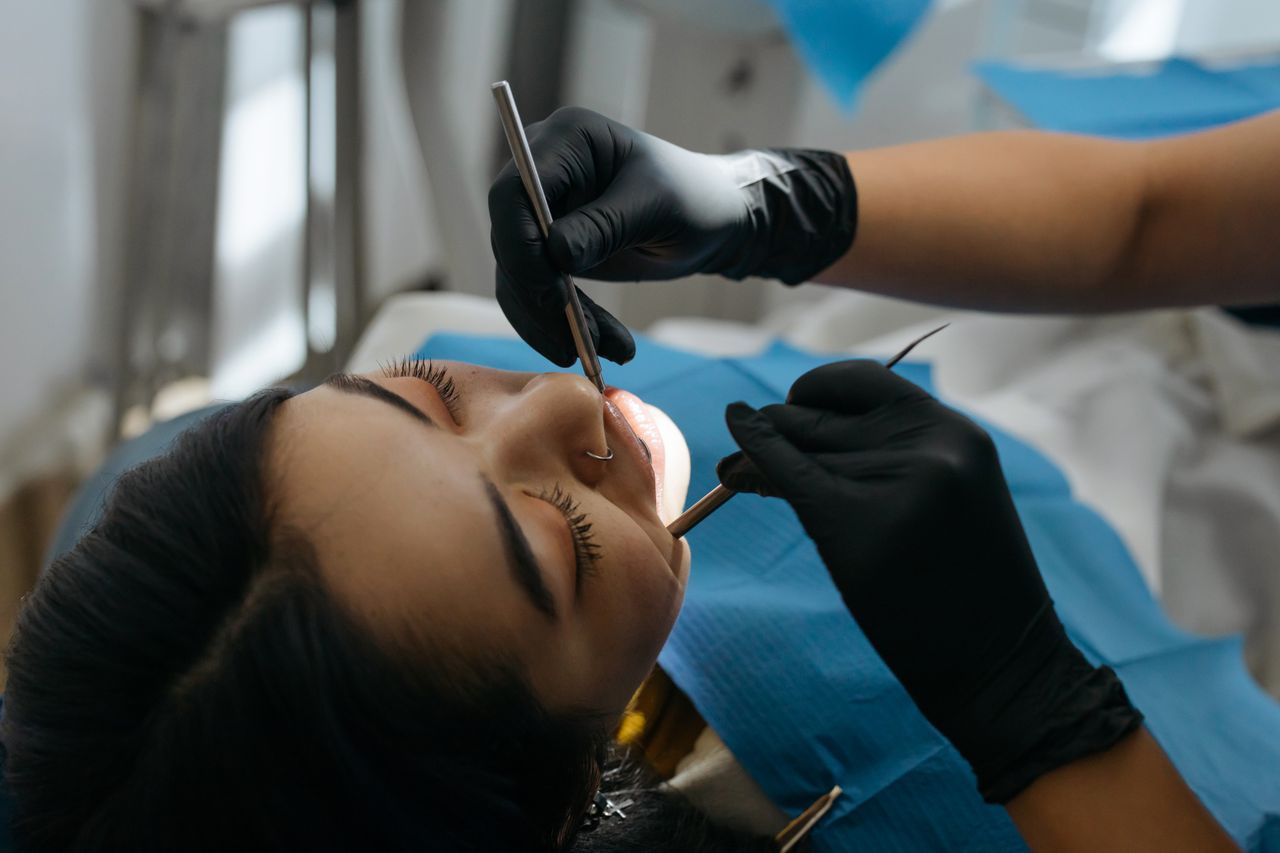
Fitting a mandibular advancement splint is a clinical process rather than simply selecting a mouthguard size. The dentist first needs to assess whether the mouth, teeth and jaw can safely support the appliance.
The exact process varies between practices and appliance systems, but custom devices generally involve assessment, dental records, manufacturing, fitting, adjustment and follow-up.
Dental assessment and records
The dentist examines the teeth, gums, existing restorations and jaw movement. A digital scan or dental impressions may then be used to create an appliance that fits both the upper and lower teeth accurately.
This custom fit helps the appliance remain stable while sleeping and allows the jaw position to be controlled more precisely.
Fitting and mandibular repositioning
At the fitting appointment, the appliance is checked for retention and comfort. The starting jaw position is selected conservatively rather than immediately advancing the lower jaw to its maximum range.
Further mandibular repositioning can then be performed gradually through the appliance’s adjustment mechanism. The aim is to improve airway function while keeping the mouth and jaw comfortable.
Review and adjustment
Follow-up appointments allow the dentist to check the fit, review symptoms and monitor the teeth and jaw. Adjustments may be made if snoring persists, the device feels uncomfortable or the desired response has not yet been reached.
Medical follow-up remains important because symptom improvement does not always correspond directly with the degree of OSA control.
What side effects can oral appliances cause?
Most side effects from a properly fitted oral appliance are related to the forces placed on the jaw, teeth and surrounding tissues. Early effects are often temporary, but long-term dental changes are possible.
Regular dental review is therefore part of oral appliance therapy rather than an optional extra.
Short-term effects
Some people experience jaw discomfort when first using a mandibular advancement device. Tooth tenderness, increased saliva and changes in how the jaw feels after removing the appliance can also occur.
These symptoms often settle as the person becomes accustomed to the appliance. Persistent symptoms should still be assessed rather than ignored.
Longer-term dental changes
Long-term use can sometimes cause tooth movement, bite changes or problems affecting the jaw joint and muscles. Regular dental reviews, as part of ongoing preventative dentistry, can help identify these changes early and protect long-term oral health.
The condition of existing crowns, bridges, implants and other dental work should also be considered when planning long-term appliance use.
How much does a mandibular advancement splint cost in Australia?
The cost of a mandibular advancement splint in Australia varies because treatment involves more than the physical device itself. Fees can depend on the appliance system, dental assessment, scans or impressions, laboratory manufacturing, fitting appointments, adjustments and ongoing reviews.
For that reason, comparing only the cost of the device can be misleading. A treatment quote should make clear which consultations, adjustments and follow-up appointments are included, and private health insurance benefits should be checked directly with the relevant fund.
An inexpensive over-the-counter mouthguard should not be treated as a like-for-like alternative. Custom oral appliances are individually fitted and clinically monitored, while generic products are not supported to the same standard for the treatment of diagnosed OSA.
Where does a mouth guard fit among other sleep apnoea treatments?
A sleep apnoea mouthguard is one treatment option rather than a universal replacement for other forms of sleep care. Obstructive sleep apnoea can have several contributing factors, so the treatment plan may include more than one strategy.
Medical assessment helps determine whether oral appliance therapy, CPAP or another option is appropriate.
CPAP and positive airway pressure
CPAP delivers continuous positive airway pressure through a mask to keep the throat open during sleep. It remains an important treatment for OSA and is particularly effective for moderate or severe disease.
When CPAP works well and is tolerated, changing to an oral appliance solely for convenience should be discussed with the treating healthcare provider first.
Lifestyle and positional measures
Weight management, reducing alcohol consumption, stopping smoking and addressing nasal obstruction can form part of OSA management where relevant. Some people also experience more breathing events when sleeping on their back, meaning positional therapy may have a role in selected cases.
These measures may complement another treatment rather than replace it when clinically significant OSA is present.
Other medical and surgical options
Some cases require assessment of structural problems affecting the nose, throat or upper airway. Surgery may be considered in selected patients when an anatomical obstruction is present or other treatments have not provided adequate control.
The appropriate pathway depends on the cause and severity of the breathing problem rather than on a single symptom such as snoring.
Choosing the right sleep apnoea treatment starts with diagnosis
A sleep apnoea mouth guard can be a useful treatment option for selected people with obstructive sleep apnoea, particularly those with mild to moderate OSA or those who cannot tolerate CPAP. However, it should not be treated as an ordinary mouthguard or a substitute for proper diagnosis.
At Optimal Dental Care, we support an informed and coordinated approach to oral health. When a mandibular advancement splint or another dental sleep appliance is being considered, we believe the dental assessment should form part of the wider care plan involving the appropriate medical and sleep-health professionals.
The goal is not simply to reduce snoring. Effective treatment should address the underlying sleep-related breathing problem while protecting the teeth, jaw and long-term oral health.
Those considering a dental sleep appliance can book a consultation with our dentists to discuss whether a mandibular advancement splint may be suitable as part of their treatment plan.
Frequently asked questions
Can a sleep apnoea mouth guard replace CPAP?
A sleep apnoea mouth guard may be an alternative to CPAP for some people, particularly those with mild to moderate obstructive sleep apnoea or those who cannot tolerate CPAP. CPAP is generally more effective at controlling breathing events, so the most appropriate treatment depends on the diagnosis, severity and medical advice.
Is a mandibular advancement device the same as a mouth guard?
A mandibular advancement device looks similar to a mouth guard but serves a different purpose. It holds the lower jaw slightly forward during sleep to help keep the airway open, while standard mouthguards mainly protect the teeth from impact or grinding.
Can an over-the-counter mouthguard treat sleep apnoea?
An over-the-counter mouthguard should not be relied on to treat diagnosed obstructive sleep apnoea. A custom mandibular advancement splint is fitted to the teeth and jaw and can be adjusted and monitored as part of an appropriate sleep apnoea treatment plan.
Can a mandibular advancement splint help with severe sleep apnoea?
A mandibular advancement splint may be considered in selected cases, but severe sleep apnoea generally requires close medical management. CPAP is commonly recommended because it is typically more effective at maintaining airflow in moderate to severe obstructive sleep apnoea.
Does a sleep apnoea mouth guard stop snoring?
A sleep apnoea mouth guard can help reduce snoring in some people by moving the lower jaw forward and creating more space in the airway. Reduced snoring does not necessarily mean obstructive sleep apnoea has been fully controlled, so follow-up assessment may still be required.
Can a mandibular advancement splint change the bite?
Yes, long-term use of a mandibular advancement splint can sometimes cause changes to the bite or tooth position. Regular dental reviews allow the fit, jaw comfort and dental health to be monitored throughout treatment.
Is a sleep study needed before getting a sleep apnoea mouth guard?
A sleep study is generally used to confirm whether obstructive sleep apnoea is present and assess its severity before treatment is selected. The results help a GP or sleep physician determine whether an oral appliance, CPAP or another treatment option may be suitable.
How is a sleep apnoea mouth guard fitted?
A sleep apnoea mouth guard is usually custom made using dental impressions or a digital scan of the teeth. The dentist then checks the fit and gradually adjusts the mandibular advancement splint so the lower jaw is positioned forward while maintaining comfort.