

You’ve just finished your whitening strips treatment, congratulations on taking a step toward the brighter smile you deserve! But the real work happens now. Proper whitening strips aftercare is just as important as the treatment itself, and many people miss critical steps that could protect their investment and extend their results for months.
The good news? Aftercare is straightforward when you know what to do, and what to avoid. In this guide, we’ll walk you through every aspect of post-whitening care, from the first 30 minutes after application through the critical 48-hour window and beyond.
Why aftercare matters
Whitening strips work by releasing a bleaching agent, typically hydrogen peroxide or carbamide peroxide, that penetrates your tooth enamel and breaks down stains. Here’s the critical point: after whitening, your teeth are temporarily more porous. This means they’re more susceptible to absorbing stains and more prone to sensitivity. The careful steps you take in the first 48 hours will directly determine how long your results last.
Do you brush your teeth after whitening strips?
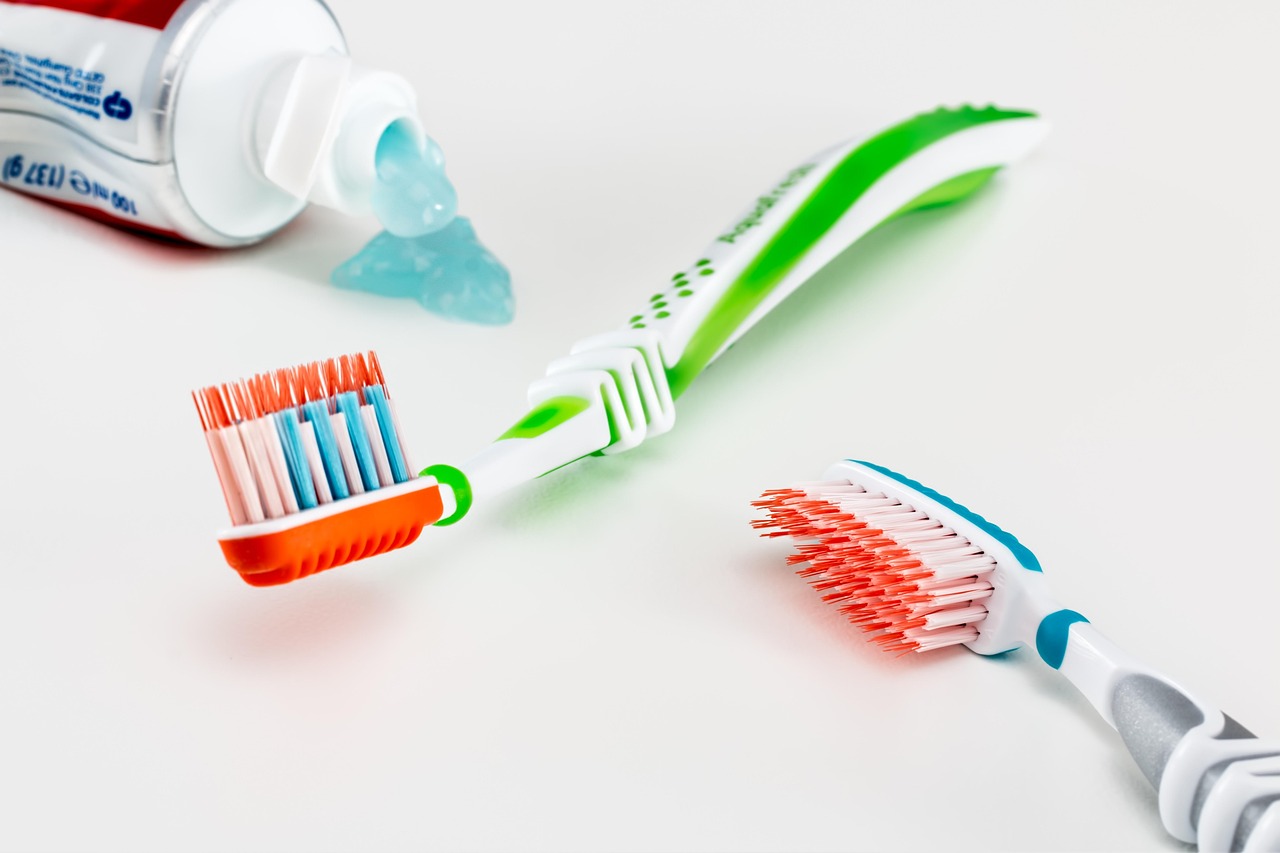
The answer is yes, but most whitening strips should remain on your teeth for 15–30 minutes, depending on the product instructions. This waiting period allows the whitening agent to fully set and reduces tooth sensitivity risk.
When you do brush:
- Use a soft-bristled toothbrush
- Brush gently with light, circular motions
- Use fluoride toothpaste, preferably for sensitive teeth
- Brush twice daily as normal
Dos after whitening strips
1. Follow the white diet (48 hours)
Your teeth become temporarily porous after whitening, like tiny sponges ready to absorb color. This is why you should avoid staining foods and drinks for the first 48 hours after removing the strips to preserve your white teeth.
2. Stay hydrated
Drink plenty of water throughout the day, especially after meals. Water helps rinse away food particles and any residual whitening gel, reducing the risk of staining. It also supports your oral care routine and overall oral health.
3. Use whitening toothpaste and mouthwash
Switch to whitening products designed for post-whitening maintenance. If your teeth feel sensitive, look for products labeled “for sensitive teeth.”
4. Schedule regular dental checkups
Visit your dentist every six months to monitor your oral health and remove stubborn surface stains. This is especially important if you experience sensitivity or uneven whitening.
5. Follow the instructions
Different whitening kits may have slightly different recommendations. Always follow the instructions provided with your at-home teeth whitening treatment for best results.
Don’ts after whitening strips
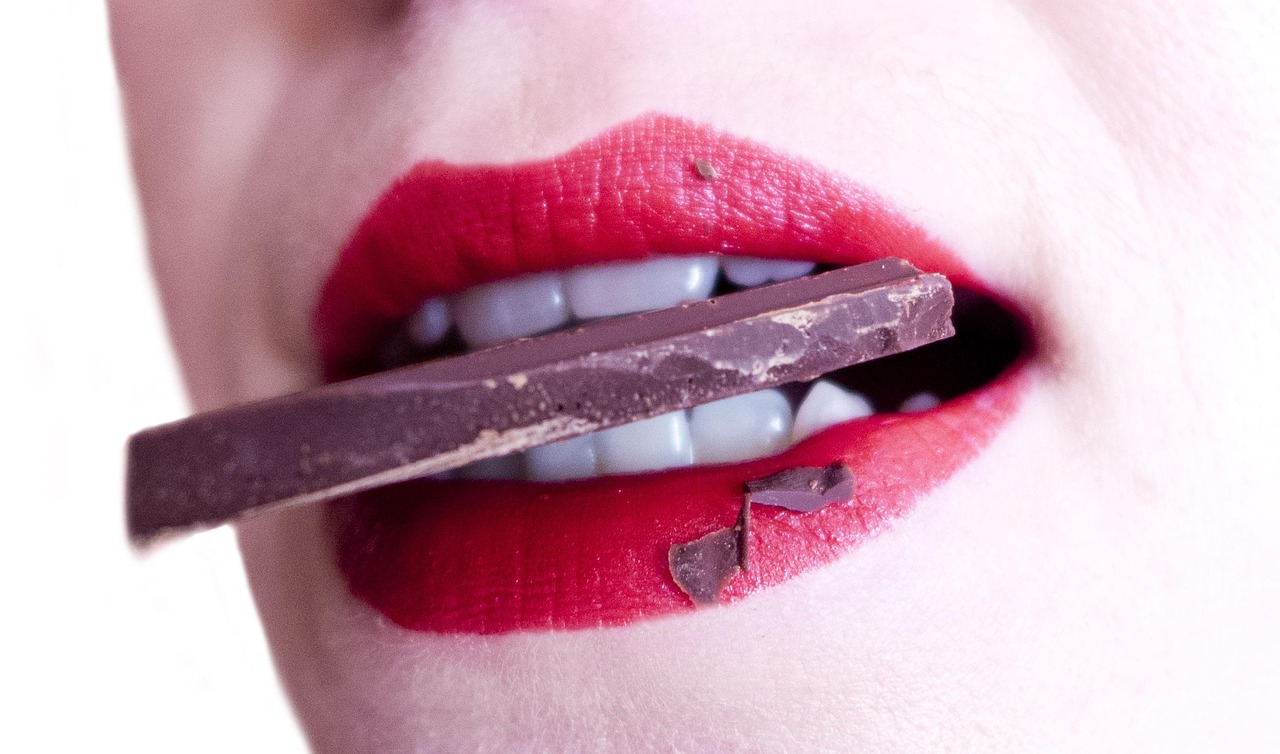
1. Avoid staining foods and drinks (48 hours)
Your teeth become temporarily porous after whitening, like tiny sponges ready to absorb color. This is why you should avoid staining foods and drinks for the first 48 hours to preserve your whitening results.
2. Don’t smoke or use tobacco
Nicotine oxidizes to yellow compounds and tar adheres quickly to porous enamel, making tobacco one of the fastest staining agents. Wait at least 48 hours after whitening before smoking or using any tobacco products. If you use tobacco regularly, consider spacing whitening treatments further apart, as staining will compromise results more rapidly than other lifestyle factors.
3. Limit sugar
Sugar feeds bacteria, leading to plaque buildup and decay, especially problematic when your enamel is vulnerable. Keep sugar intake low for the first week.
4. Avoid extreme temperatures
Skip very hot soups and ice cream for the first 24-48 hours. Temperature sensitivity is common after whitening.
5. Don’t use abrasive toothpastes
Avoid highly abrasive whitening toothpastes. Instead, consider using gentle, fluoride toothpastes specifically designed for sensitive teeth to protect newly whitened teeth. Select products with an RDA (Relative Dentin Abrasivity) score of 250 or below to protect newly whitened teeth without unnecessary wear.
Managing tooth sensitivity after teeth whitening treatment
Tooth sensitivity is common after using whitening strips and typically temporary. Most people experience relief up to a week, though those with naturally sensitive teeth may notice discomfort extending a few days longer. Here’s how to manage it for best results:
- Use toothpaste made for sensitive teeth with desensitizing ingredients like potassium nitrate or strontium chloride
- Avoid hot, cold, or acidic foods and drinks for the first few days
- Use a soft-bristled toothbrush and gentle technique for consistent oral care
- If sensitivity persists beyond 3-7 days, consult with your dentist, they can apply professional-grade fluoride gel, fluoride varnish, potassium oxalate rinses, or other desensitizers to help restore comfort
- Space out whitening treatments (wait at least 1-2 weeks between treatments) to allow enamel microhardness to fully recover
- Consider consulting your dentist before using at-home treatments if you have a history of severe sensitivity, as professional in-office options may be safer for your enamel
Your complete whitening strips aftercare plan
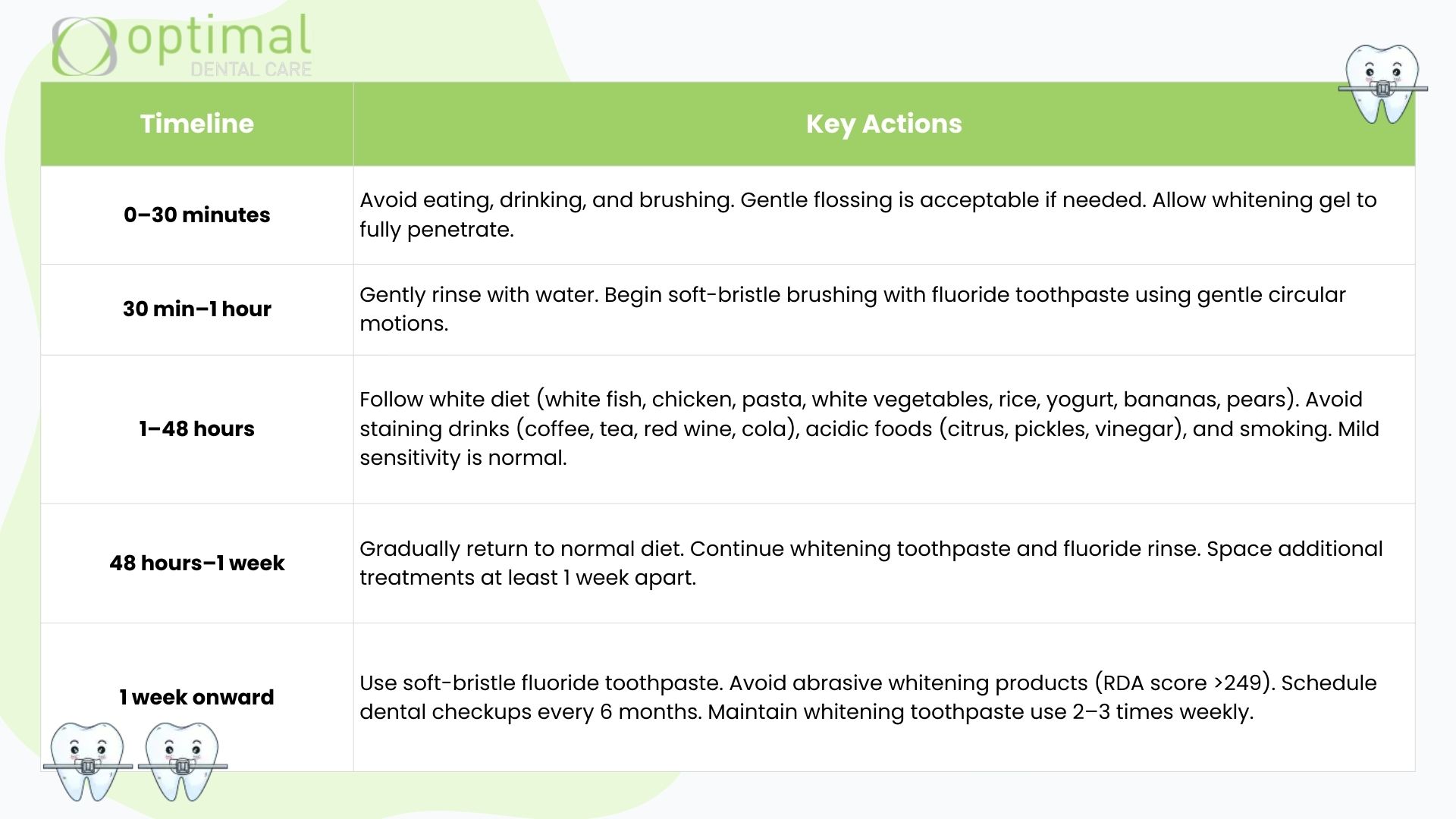
Here’s a practical summary of what to do in the first week and beyond:
At Optimal Dental Care, our dentists can assess your teeth after whitening and recommend the right maintenance schedule for you. We also provide take-home whitening kits, designed to minimise sensitivity while delivering more predictable, longer-lasting results.
Book a consultation with our friendly team:
- Location: 128 Glen Osmond Road, Parkside SA 5063
- Phone: (08) 8271 6322
A personalised approach helps protect your enamel, manage sensitivity, and keep your smile brighter for longer.
FAQs
What if I eat staining food within 48 hours?
Don’t panic. One meal won’t undo your entire teeth whitening treatment. Rinse your mouth with water and gently brush if possible.
Is sensitivity normal?
Yes, it’s very common and usually subsides within a few days to a week. Use sensitivity toothpaste if discomfort persists.
Should I see a dentist before using whitening strips?
If you have sensitive teeth, existing damage, gum disease, or other oral health concerns, yes. A quick checkup ensures whitening is safe for you and allows your dentist to address any issues beforehand.